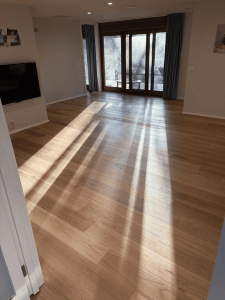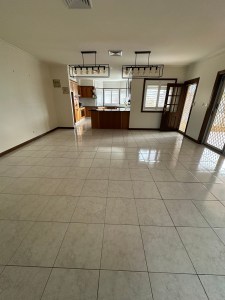
Two homes can have the exact same boards from the exact same batch, and end up with completely different results five years on. One floor stays pristine while the other cups, gaps, or creaks every time someone walks past the window. The difference is rarely the product, it’s the standard of timber flooring installation behind it.
If you’re comparing quotes for timber flooring installation in Sydney, or trying to work out what actually separates a budget install from the best timber flooring outcome for your home, this guide will be a lifesaver.

How Installation Defines Your Timber Flooring’s Performance
Engineered timber flooring is built to perform. A quality plywood core, a real hardwood veneer, and a factory-applied finish all contribute to a floor that can last 20 to 40 years.
But none of that potential gets realised if the subfloor underneath is uneven, the moisture content wasn’t checked, or the expansion gaps were guessed rather than calculated.
This is where the gap between a generic installer and an experienced, professional installer shows up. Not on installation day, when both floors can look identical, but months later, when the conditions swing through the seasons.
A quick note: every comparison below is for general reference only. Timber is a natural product, and a situation can involve complex issues. Floorplan Studio advises treating these as a reference point rather than fixed methodologies.
Discover quality timber flooring options designed to suit your space, style and everyday needs.
1. An Uneven or Unlevel Subfloor
Concrete slabs and timber subfloors are rarely perfectly flat, and even minor dips can telegraph through a floating or direct stick floor over time.
- Generic installer: Does a quick visual check, lays boards over minor dips, and relies on the click-lock system to compensate.
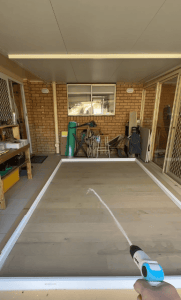
- Professional installer: Checks the subfloor with a straight edge, identifies falls that exceed acceptable tolerance, and applies self-levelling compound before a single board goes down.
2. Moisture in a Concrete Slab
New slabs, older homes, and ground-level rooms can all carry higher moisture content than they appear to, especially in Sydney’s damper months.
- Generic installer: Assumes the slab is “dry enough” and skips a proper moisture reading.
- Professional installer: Tests the slab with a moisture meter and installs a vapour barrier where readings call for it, protecting the timber from swelling, cupping, or delamination later on.
3. Timber That Hasn’t Acclimatised
Boards rarely arrive at a moisture content set by your living room, and Sydney’s humidity shifts with the seasons.
- Generic installer: Unpacks the boards and starts fixing them the same day, regardless of how long they sat in a truck or garage.
- Professional installer: Lets the timber acclimatise on-site for the recommended period so it settles to the home’s actual conditions before it’s locked into place.
4. Choosing Between Floating and Direct Stick Installation
Board width, room size, and subfloor type all influence which installation method will actually hold up.
- Generic installer: Defaults to whichever method is quickest, regardless of board width or the site’s specific conditions.
- Professional installer: Matches the method to the product. Wider, longer boards are known for stability and sound performance, while narrower boards may be floated where conditions allow.
5. Expansion Gaps Around the Perimeter
Timber moves with temperature and humidity, and a floor with no room to expand has nowhere to go but up.
- Generic installer: Rushes the perimeter gap or skips spacers altogether to save time.
- Professional installer: Sets a consistent, calculated expansion gap around every wall, column, and fixed structure, then conceals it neatly with scotia or skirting.
6. Complex Patterns with Herringbone, Chevron, or Parquetry Layouts
Patterned installations are far less forgiving of small errors than a straight-lay floor, since every misalignment compounds across the room.
- Generic installer: Starts laying without a true setting-out line, so the pattern visibly drifts by the time it reaches the far wall.
- Professional installer: Establishes a centre line and working pattern first, so herringbone or chevron layouts stay symmetrical from the doorway through to the last row.
7. Acoustic Requirements in Strata Buildings
Sydney’s apartment stock often comes with strata by-laws around impact noise, and getting this wrong isn’t just a comfort issue.
- Generic installer: Lays the floor without checking the building’s acoustic requirements.
- Professional installer: Selects and installs underlay that meets the strata’s noise rating, avoiding a failed inspection or a costly pull-up and relay.
8. Stairs, Doorways, and Cabinetry Cut-Ins
Every room has transitions and awkward corners where a floor is genuinely tested for craftsmanship.
- Generic installer: Leaves rough cuts around doorways and stair nosings, patched with gap filler that discolours within a year.
- Professional installer: Template-fits each transition and stair nosing individually, so every join stays tight and holds its finish for the life of the floor.
What This Means for Long-Term Performance
Every one of these circumstances affects the same outcome, viz, how the floor behaves once it’s living in your home.
Clean transitions, tight pattern work, and compliant acoustic underlay are usually the difference between a floor that still looks brand new a decade later vs one that needs early repair.
And this is also where professional timber flooring installation protects your investment.
The Floorplan Studio Installation Standard
Floorplan Studio is fully licensed, certified, and insured, and every installation is backed by a 2-year workmanship warranty in line with NSW Fair Trading regulations.
For years, we have mastered the art and the science behind floating floors, seamless installation to ensure uniform patterns and intricate parquetry designs. Not just that, every project we undertake adheres to the standards set out by the Australian Timber Flooring Association (ATFA).
This has resulted in Floorplan Studio being crowned with the 2026 Local Business Awards.
So, if you’re comparing the best timber flooring options for your own project, be sure to explore a wide range of styles and our past projects.
Need Help? Get in Touch Today
Book a Free Flooring Consultation
FAQs
1. What is the best timber flooring for Sydney homes?
It depends on the room. Australian hardwoods like Blackbutt and Spotted Gum suit high-traffic living areas, while European oak engineered ranges like Prestige Oak offer a lighter, more consistent look. The better question is usually which product suits your subfloor and lifestyle, which our team can help assess.
2. How much does professional timber flooring installation cost in Sydney?
Fully supplied and installed engineered timber flooring typically ranges from $100 to $200 per square metre, depending on the timber species, board size, and installation method.
3. How long does engineered timber flooring last with professional installation?
With correct subfloor preparation and installation, engineered timber flooring can last 20 to 40 years, and thicker veneers can be lightly sanded and refinished to extend that further.
4. What’s the difference between floating and direct stick installation?
Floating floors click together and sit above the subfloor on an underlay, while direct stick (glue-down) installation bonds boards directly to the slab. Direct stick generally offers better stability and acoustic performance for wider boards, while floating floors can suit narrower boards and certain subfloor types.
5. Does professional installation affect my warranty?
Yes. Most manufacturer warranties require installation to follow specific guidelines around subfloor preparation and moisture levels. Incorrect installation can void the product warranty even if the timber itself is faultless.