Should You Have It in Your Home? Let’s Talk About It
Hybrid flooring, also called SPC (Stone Plastic Composite), has been getting a lot of attention over the last few years here in Sydney. Some people call it “plastic flooring,” others call it “ridge vinyl.” Whatever name you’ve heard, it’s likely popped up if you’ve been shopping around for something that’s durable, easy to look after, and doesn’t cost a fortune.
So.. What actually is it?
Hybrid hybrid flooring is made from a mix of stone powder and plastic. It comes with a click-lock edge system, meaning you don’t need glue to install it—it just clicks together and floats over the subfloor. Most of the ones on the market are between 5mm and 9mm thick. It’s been around in Sydney for maybe 6 or 7 years so far when I wrote this blog, and thanks to its waterproof nature and low-maintenance appeal, it’s become a go-to for many families.
Why do people in Sydney love it so much? Well, to start with, hybrid itself is kind of waterproof. Its core material doesn’t absorb water, which makes it great for homes with young kids or pets. It’s also considered more environmentally friendly than some older flooring options—no glue means less formaldehyde, and most good brands these days have extremely low emissions. It’s easy to clean (a sweep and a mop will do), and if the subfloor is in good condition, it’s also quite quick to install.
But like all things in life, it’s NOT perfect.
One thing to keep in mind is that hybrid floors really don’t like uneven surfaces. The locking system can be a bit brittle, so if your floor isn’t levelled—or if the installation isn’t done properly—you might start seeing little gaps or cracks that aren’t so easy to fix later. And even though the boards themselves are waterproof, water can still get underneath them. You’ll still want to make sure moisture doesn’t sit under the floor, so bacteria and mold can grow. So no, it’s not immune to flooding or long-term damp, because even its expansion rate is so low, hybrid floors can still absorb and expanse.
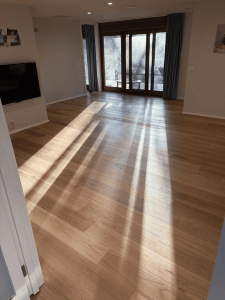
Also, SPC can be sensitive to heat. If it’s installed in a room that gets strong direct sunlight all day (you know the sun in Australia), it might warp or lift at the edges over time. And while the surface is pretty tough, it’s not completely scratch-proof—furniture legs or gritty shoes can still leave marks if you’re not careful.
Another thing we’ve noticed in the field is that not all hybrid floors are created equal. Some brands are harder, some are softer, and the quality can vary a lot depending on the materials used. So it’s definitely worth going with a reliable brand and supplier who actually knows what they’re doing.
Now, is it the Right Exact Perfect floor for your home?
It depends. If you’re after something is highly water resistant (this is a more accurate word), easy to maintain, and budget-friendly—and your floor is fairly level or you’re okay with paying to level it—then yes, hybrid is a solid choice. But if your home gets a lot of direct sunlight, or you’re concerned about scratches, or the floor needs serious levelling, you might want to consider other options too.
Before you commit, I always recommend talking to someone with experience (like us). Make sure the brand is reliable, the installer knows hybrid floors (because click-lock isn’t as forgiving as people think), and ask about the cost and process for floor prep.
In short: hybrid flooring can be a fantastic solution, but like anything in building or reno—it works best when you match the product to the real needs of your home.
If you’re still unsure or have more questions, feel free to contact us. We’re happy to help with honest advice based on real projects we’ve done right here in Sydney. No fluff, no hard sell—just what works and what doesn’t.